Omo Valley Photo Tour
Omo Valley Photo Tour
8th – 17th Jan 2027
View Dates & Prices
Group Size
4 Participants
Location
Omo Valley & Lalibela,
Ethiopia, East Africa.
TOUR OVERVIEW
In the far southwest of Ethiopia lies the Omo Valley, a land where time seems to slow and ancient rhythms still guide daily life. Recognized as a UNESCO World Heritage Site, this region is one of the world’s most important anthropological landscapes. Here, human history stretches back nearly 2.5 million years, and the presence of early hominid remains has shaped our understanding of human evolution.
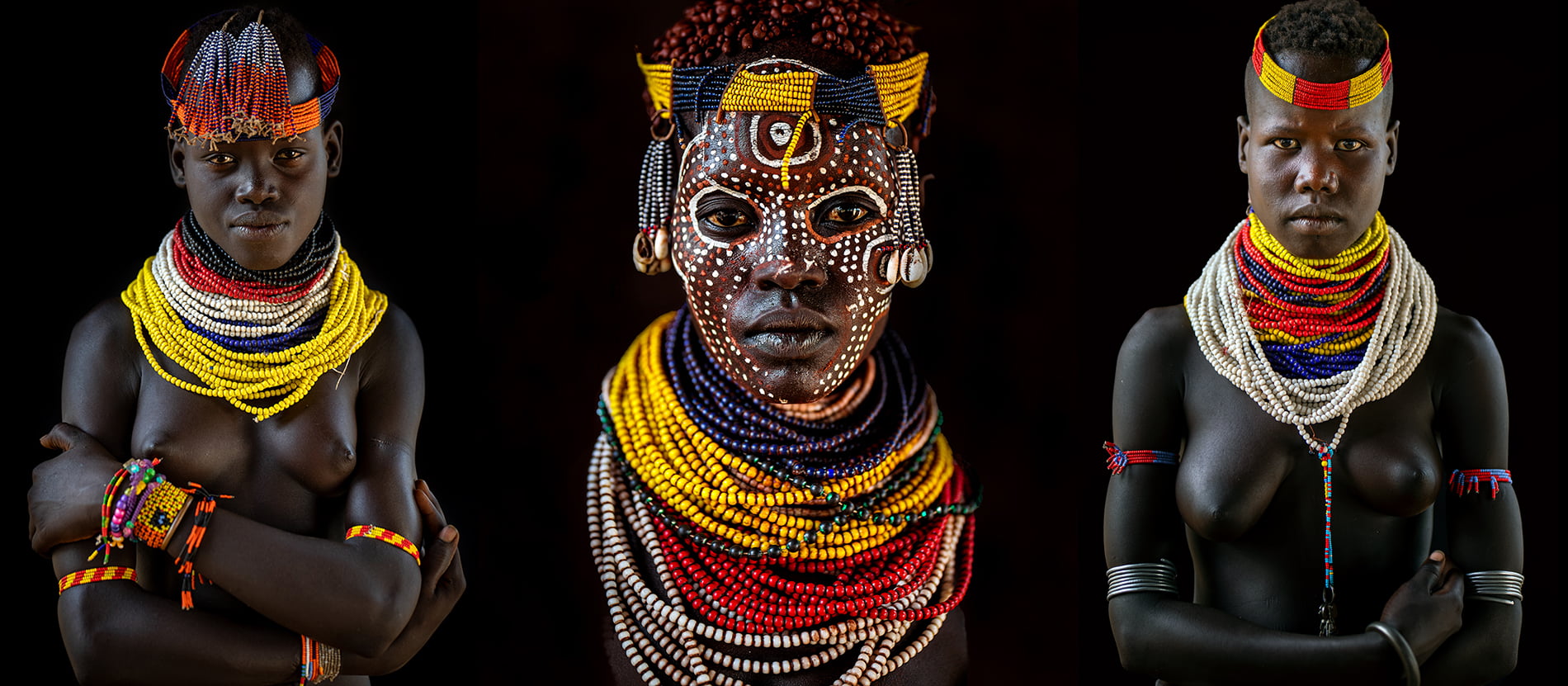
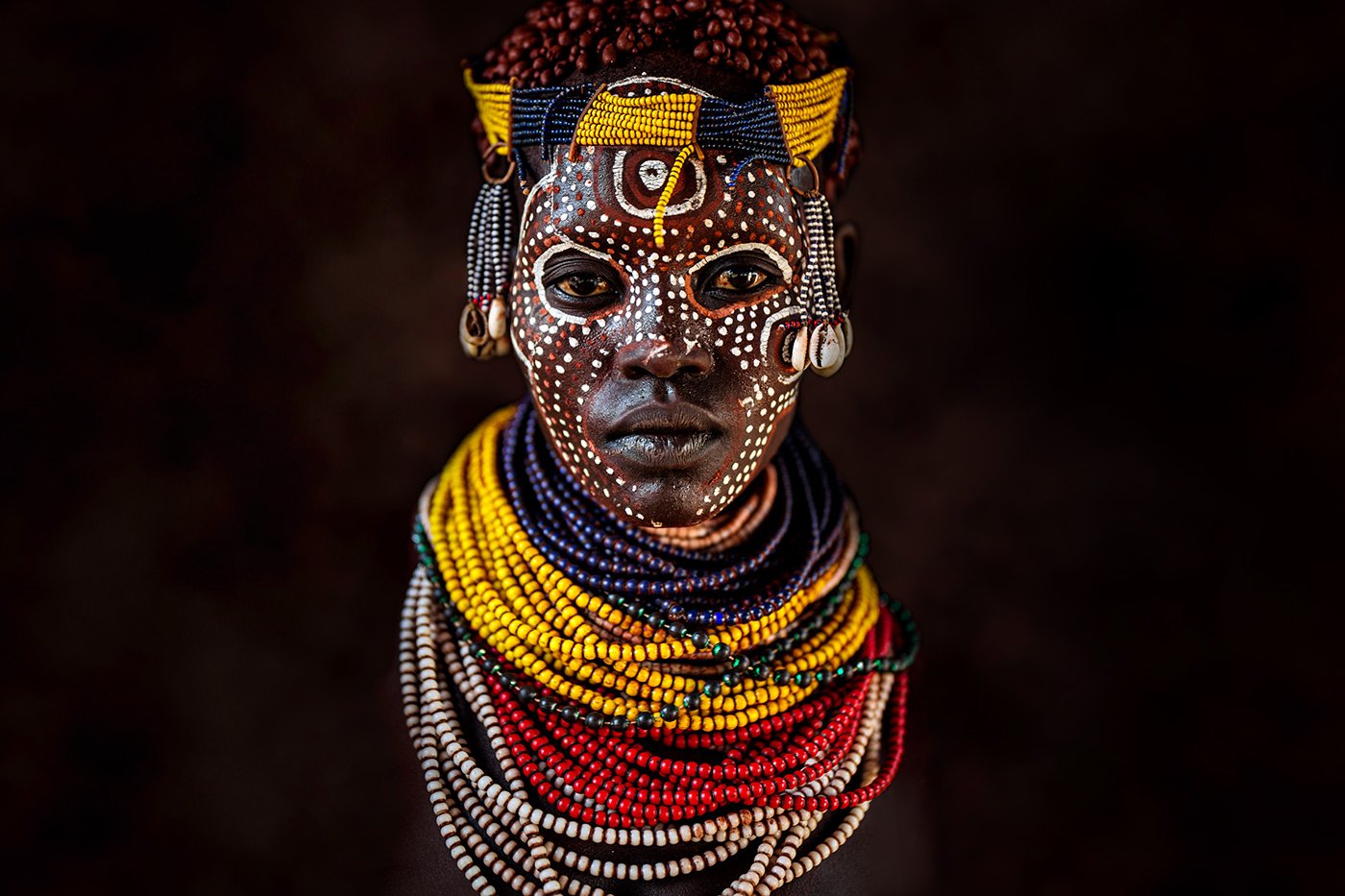
For millennia, the Omo Valley’s remote geography shielded its people from outside influence, allowing a mosaic of tribes—the Hamar, Suri, Dassanech, Karo, Nyangatom, Bena, and Mursi—to preserve their ancestral customs. Their elaborate body art, scarification, ceremonial dances, and symbolic adornments remain some of Africa’s most visually striking cultural expressions.
Today, however, these communities stand at a crossroads. Modern pressures, shifting landscapes, and outside encroachment threaten cultural traditions passed down for generations. To journey into the Omo Valley is to witness a world balancing on the edge of change—a world of beauty, complexity, and extraordinary resilience.
PRE-EXTENSION OPTION: Lalibela (6 Days)
Lalibela (Amharic: ላሊበላ) is a town in Ethiopia’s Amhara Region, located in the Lasta district of the North Wollo Zone. It is famous for its rock-cut, monolithic churches, masterpieces of ancient engineering and devotion. The entire town is an expansive living museum of antiquity, medieval heritage, and post-medieval Ethiopia.
To Christians, Lalibela is one of the country’s holiest cities and an important center of pilgrimage.
Lalibela is history and mystery carved into stone—its spiritual soul alive with ancient Christian rites and traditions. No matter how many photographs you’ve seen, nothing prepares you for the overwhelming experience of witnessing these rock-hewn churches in person. It is not only a UNESCO World Heritage Site, but truly one of the world’s architectural and spiritual wonders.
TOUR OVERVIEW
In the far southwest of Ethiopia lies the Omo Valley, a land where time seems to slow and ancient rhythms still guide daily life. Recognized as a UNESCO World Heritage Site, this region is one of the world’s most important anthropological landscapes. Here, human history stretches back nearly 2.5 million years, and the presence of early hominid remains has shaped our understanding of human evolution.
For millennia, the Omo Valley’s remote geography shielded its people from outside influence, allowing a mosaic of tribes—the Hamar, Suri, Dassanech, Karo, Nyangatom, Bena, and Mursi—to preserve their ancestral customs. Their elaborate body art, scarification, ceremonial dances, and symbolic adornments remain some of Africa’s most visually striking cultural expressions.
Today, however, these communities stand at a crossroads. Modern pressures, shifting landscapes, and outside encroachment threaten cultural traditions passed down for generations. To journey into the Omo Valley is to witness a world balancing on the edge of change—a world of beauty, complexity, and extraordinary resilience.
PRE-EXTENSION OPTION: Lalibela (6 Days)
Lalibela (Amharic: ላሊበላ) is a town in Ethiopia’s Amhara Region, located in the Lasta district of the North Wollo Zone. It is famous for its rock-cut, monolithic churches, masterpieces of ancient engineering and devotion. The entire town is an expansive living museum of antiquity, medieval heritage, and post-medieval Ethiopia.
To Christians, Lalibela is one of the country’s holiest cities and an important center of pilgrimage.
Lalibela is history and mystery carved into stone—its spiritual soul alive with ancient Christian rites and traditions. No matter how many photographs you’ve seen, nothing prepares you for the overwhelming experience of witnessing these rock-hewn churches in person. It is not only a UNESCO World Heritage Site, but truly one of the world’s architectural and spiritual wonders.
TOUR LIMELIGHT
- 10 days of high-impact photography in the Omo Valley, capturing a wide range of ethnic groups, each offering unique visual stories, textures, colors, and character.
- 6 exclusive days photographing Lalibela during the Ganna Festival, where ancient ritual, emotion, and atmosphere create unforgettable frames.
- Omo Valley Visual Highlights: Photograph some of Africa’s most visually striking tribes—including the Suri, Mursi, Hamer, Nyangatom, Karo, Bena, and Dassanech—renowned for their body paint, beadwork, scarification, and ceremonial adornments.
- Exceptional portrait opportunities, from beautifully decorated elders to expressive youth—ideal for building a powerful fine-art or ethnographic portrait portfolio.
- Lalibela’s Candlelight Ceremony: Capture the dramatic night procession where thousands of pilgrims illuminate the ancient stone churches with candles, creating breathtaking low-light photographic possibilities.
- Dynamic street photography of pilgrims and locals in vibrant traditional attire, moving through Lalibela’s narrow lanes during the festival.
- A rare chance to document Lalibela’s cultural intensity—its spiritual devotion, ancient architecture, ritual movements, and atmospheric light—all converging into a photographer’s dream.
- Guided by a knowledgeable English-speaking local expert, ensuring meaningful access, cultural understanding, and the best angles and locations for exceptional imagery.
- Post-Processing & Critiques: Expand your skills through small-group editing sessions and constructive critiques.
- Exclusive Small Group (Only 4 Participants): Travel with a close-knit team for minimal impact and maximum opportunities, guided by an internationally renowned photographer with deep local expertise.
ITINERARY
Pre-Tour Briefing
Before the journey begins, we will conduct a detailed pre-tour briefing covering the key attractions, cultural interactions, safety guidelines for both photographers and equipment, and essential travel instructions.
This briefing will help you prepare for the photographic conditions, logistical flow, and cultural etiquette of the Omo Valley and Lalibela.
All discussions will take place through a dedicated WhatsApp group, email, or telephone after your seat is confirmed.
Day 1: Arrival in Addis Ababa
Upon arrival on your international flight, our driver will meet you at the airport and transfer you to your hotel in the heart of Addis Ababa. After check-in, you’ll have time to freshen up and rest before we proceed with the local currency exchange.
In the evening, we will gather for a traditional Ethiopian dinner at a local restaurant—a perfect introduction to the country’s vibrant culture and cuisine.
Overnight stay at a hotel in Addis Ababa.
Day 2: Flight to Jimma & Overland Journey to Mizan Teferi
After breakfast, we board a comfortable domestic flight from Addis Ababa to Jimma, a charming and historically rich city in Ethiopia’s southwestern highlands. Upon arrival, we embark on a scenic journey to Mizan Teferi, traveling through some of the country’s most pristine and fertile landscapes.
This region is famed for its lush forests, rolling green valleys, and Ethiopia’s largest and most prestigious coffee plantations—an area celebrated as the birthplace of some of the finest coffee on earth. The drive offers a serene and refreshing immersion into rural Ethiopia, with elegant viewpoints and tranquil natural beauty throughout the route.
Settle in for the night at the Salayish International Hotel, offering comfort and warm hospitality after a relaxing day of travel.
Day 3: Kibish – First Encounter with the Suri Tribe
After breakfast, we begin our journey toward Kibish, the remote homeland of the Suri tribe. Upon arrival, we will set up our camp and prepare for our first interactions with one of the most visually striking tribal communities in Africa.
In the afternoon, we visit a Suri village to begin photographing traditional body paint, scarification, ornaments, and everyday life. We return to camp for refreshments, followed by a second portrait session in the late afternoon when the light becomes beautifully soft and atmospheric.
Dinner and overnight stay at our private campsite near Kibish.
Day 4: Suri Villages – Lip Plates & Floral Adornments
After breakfast, we drive to another Suri village to meet and photograph women renowned for their distinctive clay lip plates and vibrant floral decorations. These unique adornments are powerful expressions of identity, beauty, and cultural heritage among the Suri.
We spend the day creating a variety of portraits and documentary images, capturing both intimate close-ups and expressive environmental compositions.
Overnight stay at our camp near Kibish.
Day 5: Nyangatom Tribe – Borderland Culture
Today we travel to meet and photograph the Nyangatom tribe (also known as Bume or Gnangatom)—one of the most colourful and visually expressive groups in the Omo Valley. They live close to the border of South Sudan, and their traditional dress, body ornaments, and scarification make them uniquely captivating photographic subjects.
Historically, the Nyangatom migrated from northern Uganda into southern Ethiopia approximately 150 years ago, and their cultural identity still reflects a fascinating blend of influences from this long migration.
Overnight stay at our camp in Kangatan.
Day 6: Karo Tribe – Body Painting Traditions
After breakfast, we drive toward the Karo tribe, renowned for their intricate and colourful body painting—an expressive art form used during ceremonies, rituals, and social gatherings. Although the Karo are the smallest tribal group in the Omo Valley, their visual culture is among the most distinctive and photogenic in the region.
In the afternoon, we continue to Turmi, where we check in at Emerald Lodge for our overnight stay.
Day 7: Hamar & Dassanech Tribes
In the morning, we photograph the Hamar tribe, one of the most renowned and visually striking communities in the Omo Valley. Their traditional hairstyles, ochre body decorations, and distinctive beaded jewellery make for compelling portrait and documentary photography.
In the afternoon, we drive toward the Kenyan border to visit the Dassanech tribe, where we will learn about their hunting and pastoral traditions and explore their unique village architecture. The Dassanech are known for their energetic communal dances, and with luck we will have the opportunity to witness and photograph this lively cultural expression.
In the evening, we return to Turmi for another night at Emerald Lodge.
Day 8: Mursi Tribe & Jinka Market
Early in the morning, we travel through Mago National Park to visit the extraordinary Mursi tribe. Mursi women are widely known for their distinctive clay lip and ear plates, symbols of beauty, maturity, and cultural identity. This visit offers some of the most compelling portrait opportunities in the Omo Valley.
After our session, we return to Jinka, and in the afternoon explore one of the oldest and most colourful markets in the region. Here, we will have the opportunity to photograph members of various tribes, including the Bena and Tsemay, as they trade, socialise, and exhibit their vibrant traditional attire.
We end the day with an overnight stay at NASA Hotel, Jinka.
Day 9: Fly from Jinka to Addis Ababa
Day 10: International Departure
Our local support team will accompany you to the airport and assist with your onward connection to your international flight.
It is always hard to say goodbye after such a meaningful journey—wishing you a safe trip and wonderful memories to take home!
Important Note on Itinerary
Please note that itineraries in the Omo Valley may change due to local conditions, cultural events, community access, or weather patterns. For this reason, we have included a buffer of a few days on either side of the tour to ensure flexibility and the best possible photographic experience.
Special cultural activities or ceremonies—such as the Bull Jumping Ceremony or Wedding Ceremonies, which bring together many South Omo Valley tribes for bartering and ritual exchange—are not included in the tour cost, as they are spontaneous cultural events, not scheduled tourist activities.
If such events take place during the tour, we will do our best to arrange access.
EXTENSIONS
Lalibela Extension – 6 Days extension to rock-hewn churches Lalibela (ላሊበላ), which is not only a World Heritage site but truly a World Wonder.
PLEASE NOTE THAT THE EXTENSION STARTS BEFORE THE MAIN TRIP. To join the Pre-Extension, you’ll have to reach Addis Ababa by 03.01.2027, in the afternoon, and check in at our pre-booked hotel.
Pre-Extensions: Lalibela (6 Days)
Day 1: Arrival in Addis Ababa
Upon arrival on your international flight, you will be met by our driver and transferred to your hotel in the centre of Addis Ababa. After check-in, take time to freshen up and rest before we proceed for local currency exchange.
In the evening, we will enjoy a traditional Ethiopian dinner at a local restaurant—an excellent introduction to the country’s warm hospitality and cuisine.
Overnight stay at a hotel in Addis Ababa.
Day 2: Addis Ababa → Lalibela
Fly from Addis Ababa to Lalibela, then transfer to the town, located approximately 25 km from the airport.
In the afternoon, we visit the Northwestern Cluster of Lalibela’s remarkable rock-hewn churches, including Bet Medhane Alem, Bet Maryam, Bet Meskel, Bet Danaghel, Bet Mikael, and Bet Golgotha. These ancient structures are among Ethiopia’s most sacred sites and represent masterpieces of medieval architecture and devotion.
In the evening, we visit a local home to witness the preparation of traditional dishes and join the Ganna celebrations—a unique opportunity to experience Ethiopian hospitality and festive rituals from within the community.
Day 3: Exploring the Eastern Churches & Night Rituals
After breakfast, we continue exploring the remaining rock-hewn churches of Lalibela, including Bete Amanuel, Bete Abba Libanos, Bete Gabriel-Rufael, and the iconic Bet Giyorgis (Church of St. George)—widely regarded as the most elegant and architecturally refined of all the Lalibela churches.
After lunch, we return to the hotel for rest. Later in the evening, we revisit Bet Maryam to witness and photograph night-time rituals, spending approximately 3 to 4 hours inside the ancient church complex. We then return to the hotel for overnight accommodation.
Day 4: Candle Ceremony at Bet Giyorgis
After breakfast, we visit Bete Marqorewos, Bete Abba Libanos, and Bete Gabriel-Rufael, continuing our exploration of Lalibela’s extraordinary monolithic churches.
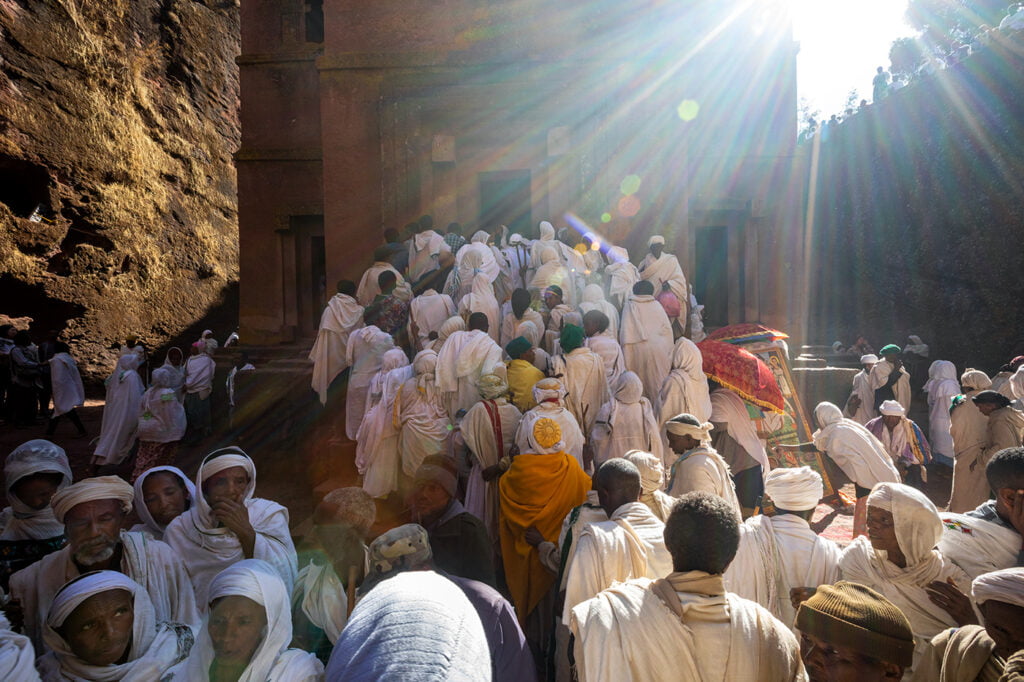
After lunch, we return to the hotel for a well-deserved rest. Today we have an early dinner, as the evening leads into one of Lalibela’s most spectacular ceremonial events. Late at night, we make our way to Bet Giyorgis (Church of St. George) to witness the unforgettable candlelight ceremony, when thousands of pilgrims illuminate the ancient complex as part of the Ganna celebration of Christ’s birth.
Just before sunrise, we return to the hotel for rest and overnight stay.
Day 5: Ganna Celebration – The Birth of Christ
Today is our final day in Lalibela. We spend the morning documenting the vibrant Ganna celebrations, as pilgrims gather in traditional attire to mark the birth of Jesus Christ. This is one of Ethiopia’s most sacred and visually inspiring religious events, offering powerful opportunities for photography and cultural immersion.
Day 6: Return to Addis Ababa – Departure
After breakfast, we fly back to Addis Ababa. Upon arrival, our support team will accompany you to the airport for your onward flight, concluding the Lalibela Photo Tour.
DATE & PRICES
| Tour | Date | Double Occupancy | Single Occupancy |
|---|---|---|---|
| Omo Valley Photo Tour | 8th - 17th Jan 2027 | 6500 USD Per Person | 7500 USD Per Person |
| Extensions: Lalibela | 3rd - 8th Jan 2027 | 3500 USD Per Person | 3850 USD Per Person |
Due to the recent Marburg virus outbreak in Jinka, the Omo Valley Photo Tour has been cancelled for the safety of all participants. The outbreak was confirmed by the World Health Organization (WHO) on 14 November 2025, and since the tour requires stay in Jinka, proceeding would not be safe.
Meet your mentor

Apratim Saha
Apratim Saha is the ideal mentor for the Omo Valley Photo Tour, having successfully led numerous Omo Photo Tours in Ethiopia. With extensive experience in organizing photo tours in Ethiopia, he is well-connected with many local tribes and agents, allowing him to guide you to the core of the indigenous people. Moreover, his in-depth knowledge of people photography enhances the overall tour experience.
Internationally renowned photographer Apratim Saha has been living his dream of travelling to various countries for his photographic assignments and workshops for the past three decades. Apratim is a contributing photographer for National Geographic, Getty Images, and Stocksy United. He is a Canon Brand Ambassador and the Global Brand Ambassador and Mentor for Datacolor, Nisi, Godox, Vanguard, Dxo, and Blackrapid.
He has over 38 years of experience, from traditional film to digital photography. He is a commercial photographer specializing in people photography, portraiture, lifestyle & editorial clients. Visit Apratim’s website for more.
Meet your mentor

Apratim Saha
Apratim Saha is the ideal mentor for the Omo Valley Photo Tour, having successfully led numerous Omo Photo Tours in Ethiopia. With extensive experience in organizing photo tours in Ethiopia, he is well-connected with many local tribes and agents, allowing him to guide you to the core of the indigenous people. Moreover, his in-depth knowledge of people photography enhances the overall tour experience. Internationally renowned photographer Apratim Saha has been living his dream of travelling to various countries for his photographic assignments and workshops for the past three decades. Apratim is a contributing photographer for National Geographic, Getty Images, and Stocksy United. He is a Canon Brand Ambassador and the Global Brand Ambassador and Mentor for Datacolor, Nisi, Godox, Vanguard, Dxo, and Blackrapid. He has over 38 years of experience, from traditional film to digital photography. He is a commercial photographer specializing in people photography, portraiture, lifestyle & editorial clients. Visit Apratim’s website for more.
FAQs
Why go on an Exposure expedition?
At EXPOSURE, we are as passionate about photography as you are, allowing us to fully understand your challenges and needs. This insight enables us to design our Photography Tours and Workshops to help you excel in your craft and set you up for success. Our goal is to provide every participant with a deeply enriching experience, both in terms of photography and personal growth.
- Carefully planned to maximize photo opportunities.
- Incredible destinations.
- A small group of 4 – 6 participants.
- Led by professional photographers.
- Hands-on photography assistance in the field.
- Extensive learning off-field.
- Image reviews and presentations.
- Post-tour guidance, advice, and assistance.
Specifically, you will get –
- A clinically organized expedition with utmost attention to your comfort and needs
- An open, informal environment that promotes interactive learning
- A team that will strategize and work to a plan to optimize opportunities and ensure a great tour
- Practical, hands-on assistance in photography from the tour Mentor/Skippers, both in the field and pre or post-photo tours or workshops.
- Individual interaction with the Mentors over general or specific issues
- First-hand learning from the masters in the art and craft of photography
- That’s not all. When you’re not out in the field using the camera, you will learn and enjoy our sessions on photography techniques, photograph reviews and presentations, and discussions on topics relevant to the Photo Tour in question.
Can I join this trip as a non-photographer?
Absolutely! Whether you’re accompanying a photography enthusiast or simply fascinated by ancient cultures, living traditions and authentic travel experiences, you are warmly welcome to join us.
Although this journey is designed with photographers in mind, it is equally rewarding for anyone interested in culture, anthropology, visual storytelling, spirituality, and authentic encounters. Over the years, many non-photographers—including spouses, friends, partners and curious travellers—have joined these tours and found them deeply meaningful.
As long as you enjoy observing traditional cultures, interacting respectfully with local people, and witnessing unique ways of life, you will have an unforgettable time. Even without a camera, there is so much to experience: tribal encounters, colourful markets, ancient religious ceremonies, remote landscapes, and the truly unique human heritage of the Omo Valley and Lalibela.
You certainly won’t be left out. Every participant is included in all cultural visits, interactions, activities, and ceremonies. Many non-photographers often say that watching the moments unfold—without the pressure of taking photographs—allows them to connect even more deeply with the experience.
There is genuinely a place for everyone on this journey.
How fit do I need to be to join this photo tour?
All of the locations we visit in the Omo Valley are accessible by our Land Cruiser vehicles, so a high level of physical fitness is not required. Most activities involve short walks around villages and markets, with plenty of time to rest and move at your own pace.
However, if you choose to join the Pre-Extension Lalibela Photo Tour, please note that some walking is necessary to reach the rock-hewn churches. The paths are generally easy to moderate, and we take our time to ensure everyone is comfortable.
If you are able to walk at a normal pace and climb short stairs, you should have no difficulty participating. This tour is suitable for most travellers, including those with limited photography equipment or mobility.
What should I expect during the tour?
- Altitude: The maximum altitude during the tour will be around 2,400 meters, which is generally comfortable for most travellers.
- Basic facilities in the Suri region: While staying with the Suri tribe, facilities are minimal and shower access may be limited for up to two days. Our campsite is located beside the river where you can enjoy a natural bath, and we also bring a portable shower setup, which will be installed at our Suri campsite for added comfort.
- Limited connectivity: In several locations throughout the Omo Valley, there may be little or no internet or mobile network coverage. This is part of the remoteness of the region and offers a rare chance to disconnect and fully immerse yourself in the cultural experience.
What You Should Not Expect?
- A luxury holiday: While we have arranged the most comfortable accommodations and reliable transport available in this region, this is a photographic expedition, not a resort-style vacation. Expect early starts, long days in the field, and occasionally challenging shooting conditions—all part of the adventure.
- Strictly fixed schedules: Flexibility is essential. Weather, lighting, cultural access, and unexpected opportunities often influence our daily plans. We may adjust the schedule to optimise light, tribal interactions, or ceremonies. This is part of working in remote environments and ensures the best photographic results.
What kind of things should I bring?
This is not a cold-weather trip, so you don’t have to bring warm clothing, but for the Lalibela, only bring light warm clothing like a windcheater because at night at churches it will be slightly cold.
This is a suggested packing list to make your trip a fulfilling and comfortable experience.
- Backpack or suitcase
- Comfortable light boots for walking
- Headlamp/flashlight
- Lightweight trousers
- Sunglasses
- Sun care cream
- Mosquito repellent
- Water bottle with 1 litre of capacity
- Wet tissues
- Insurance confirmation copy
- Emergency contact number
- Carry your essential and basic medicines for headaches, fever, stomach upset, etc.
- Extra battery for the camera
- Adequate storage media
Suggested Equipment:
You should bring cameras, a laptop (for editing in the evenings), and a head torch these kinds of things instantly spring to mind. Don’t worry about recharging since we will have generators to top up during each camping night. Once you confirm your booking with a 50% deposit, we will send you all the information you need to fully prepare yourself for this epic journey.
This is just an idea about the suggested camera and accessory:
- One or two DSLR or Mirrorless (Full Frame or Crop Sensor) cameras. If you use a full-frame DSLR or mirrorless camera, for much of the time, when photographing the tribes or rituals, you will want to cover focal lengths of around 24-70mm or 24-105mm. However, a kit lens (18-55/3.5 or 4.0) will also work.
- For photographing tribal portraits, consider bringing a prime telephoto lens of 85mm.
- If you bring a good quality bridge camera instead of a DSLR or mirrorless camera, it will be best if it has an optical zoom of 18-20x or more, combined with a reasonable wide-angle at the other end of the zoom range.
- Protector for your lens.
- Power Bank & Electric Socket Extension.
- Adequate memory card and Card reader.
- Be sure to bring plenty of spare battery power for your camera and external hard drive with adequate space and a card reader.
- A Computer with photo-processing software [Lightroom, Photoshop]. (If you are not having this software, don’t worry we’ll provide it.)
- Carry a small size soft cloth or towel which you may require to wrap your camera during the night shoot.
- Carry a microfiber to wipe the lens.
Health & Vaccinations
Travellers to the Omo Valley should be up to date on routine vaccinations. Yellow Fever, Typhoid, Hepatitis A, and Meningitis are commonly recommended. Please consult your doctor or travel clinic 4–6 weeks before travel for personalised advice.
Required
Yellow Fever: Recommended for all travellers to the Omo Valley. A valid Yellow Fever certificate may be required if arriving from a risk country.
Recommended
- Routine vaccinations (Tetanus, Diphtheria, Polio)
- Hepatitis A
- Typhoid
- Meningitis
Additional
- Malaria: Medication recommended; use mosquito precautions.
- Rabies & Hepatitis B: Consider depending on travel plans.
🩺 We recommend consulting your physician at least 4–6 weeks before departure to discuss your personal needs. For more advice on vaccinations, you can also visit: the WHO Travel Health Advisory
Climate
During this season, the weather conditions in Omo Valley are usually warm and sunny, with typical daily maxima being between ranging from +30°C to +19°C.
Travel Visa & immigration
Most travellers require a visa to enter Ethiopia. E-visas are strongly recommended and can be obtained easily through the official Ethiopian government website.
Many nationalities are also eligible for a Visa on Arrival (VOA) at Addis Ababa Bole International Airport, which costs approximately USD 50 for a 30-day single-entry visa.
There are two types of tourist visas available:
- E-Visa (online application)
- Visa on Arrival (for eligible nationalities at Bole Airport)
We recommend applying online in advance for convenience.
Official application link: (https://www.evisa.gov.et/visa)
EXPOSURE cannot be held responsible for your entry/exit arrangements, so please note that obtaining the required documentation is solely your responsibility. No refunds will be made in the event of you being refused entry into the country where travel is to take place.
Travel Information
Arrival Airport: Bole Addis Ababa International Airport (ADD)
Departure Airport: Bole Addis Ababa International Airport (ADD)
Mandatory Insurance
We highly recommend that you get travel and medical insurance. Your own domestic medical insurance and private health scheme will not cover you whilst you are overseas.
Terms and Conditions
- All domestic flights
- Transportation from Addis Ababa to Ulan Addis Ababa, overland transport, translators.
- Accommodations in a Double Occupancy in Hotels. But we have the option of Single Supplements also, please check the price.
- Breakfast, Lunch, and dinner on all days, including non-alcoholic drinks.
- Expert guidance on Photography.
- English-speaking guide
- All entrance, zone and camera fees
- Local model donations
- International flights
- Visa fees
- Your personal travel insurance
- Gifts, personal treats
- Any tips
- Any alcoholic drinks
- Laundry services
- Medical expenses
- All expenses of a personal nature
- Special activities like the Bull Jumping Ceremony or Wedding Ceremony.
Important points to be noted
- The photo tour is designed from Bole Addis Ababa International Airport (ADD) to Bole Addis Ababa International Airport (ADD).
- The tour is divided into two parts; if anyone does not want to join the complete tour and wishes to do only Lalibela or only Omo Valley, that is also possible.
- The Omo Valley Photo Tour is conceptualized in such a way that personal attention can be given to each and every photographer, and for that, the group will be restricted to 4 participants only.
- This tour has been specifically designed for photographers. Non-photographer spouse/friend may be accommodated on the expedition, but at full cost and on agreeing to stick to the schedule of the tour.
- While all care would be taken to stick to the schedule, unforeseen circumstances and time constraints might lead to some changes.
- As it is a foreign country, your mobile number will not work unless you have international roaming. A local SIM can be purchased against a passport document.
- Please note that costs and dates are subject to change as not all our partner properties and local airlines have released their rates. Should we need to revise costs, we will endeavour to keep fees and dates as close to the original.
- Please also note that the timings of the programs can be changed according to the present situation of the trip.
- EXPOSURE reserves the right to amend, increase, and correct errors in the price of tours. Please refer to “Terms and Conditions”.
- If we are unable to find a suitable match for your desired occupancy type, we reserve the right to upgrade you automatically to the next available option. You agree to pay the difference in cost.
- The maximum number of participants is listed under “Group Size” of each individual photo tour/workshop. However, we reserve the right to add up to two participants to the maximum number of participants per photo tour/workshop.
- In joining this photo-tour, you will be required to sign an informed consent document prior to departure.
- Healthcare services outside Addis Ababa are inconsistent and may be difficult to access. Pharmaceuticals can be scarce or unavailable in these regions.
Deadlines
Registration is open from 15th December 2025 till 31st October 2026 or till the seat reservations end.
Conditions
- This photo tour requires a minimum of 2 participants to proceed. If the minimum number is not met, the trip may be postponed or cancelled, and any deposits will be fully refunded.
- While we’ve carefully curated the itinerary and logistics, flexibility is essential. Local conditions, festivals, or weather may lead to changes in schedule or route.
- Participants will be granted the trip based on email confirmation on a first-come come first first-served basis. Feel free to call +91 8509333385 or WhatsApp at +918900702900 for any further assistance.
Booking
To reserve your spot, a 30% deposit of the full tour amount is required at the time of booking. The remaining balance must be paid 90 days before the tour. You can pay via the online payment link on our website, or request our account details or PayPal information for the transfer. Your reservation may be cancelled if full payment is not received by the specified deadline. After making the payment, please send us a copy or screenshot of the bank receipt. Upon confirmation, we will email you the Rules and Regulations of the tour, securing your spot on the photo tour.
Cancellation and Refunds
All cancellations must be made in writing (email is acceptable) and will take effect on the date of receipt (by standard mail or electronically). Once the tour begins, there can be no refunds for any unused portions, including rooms, meals, flights, tour days, events, or services. Please note that the cancellation penalties outlined below are based on costs incurred by EXPOSURE on your behalf, including non-refundable deposits or payments to agents, hotels, airlines, etc.
In the event of a cancellation or modification of your confirmed booking, EXPOSURE’s Cancellation and Refund Policy will apply, and you must fully agree to be bound by it. Any refunds will be processed within 15 working days from the date of written confirmation of cancellation, via the same method used for payment.
Cancellation fees are as follows:
- 40% of the total fee if cancelled 90 days or more before the start of the trip.
- 100% of the total fee if cancelled 59 days or less before the start of the trip.
Please carefully read all details on this page and the Detailed Terms and Conditions, as well as the Disclaimer/Undertaking in the Registration cum Booking Form.
Trip cancellation by EXPOSURE:
- In the unlikely event that EXPOSURE must cancel a tour or workshop due to a lack of participants or any other reason, a full refund, including the deposit, will be issued.
- We will notify you in advance if a cancellation is being considered. If a photo tour is cancelled, 100% of your deposit and payments will be refunded.
- However, EXPOSURE is not liable for any expenses incurred, such as airfare, accommodations, or equipment costs. For this reason, we strongly recommend purchasing travel insurance with trip cancellation coverage.
Testimonials





We had an incredible experience on the Omo Valley Photo Tour with Apratim. From the moment he met us at the airport, everything was thoughtfully planned and professionally executed. We were given rare, immersive access to the tribal communities of...